Self-swab DNA kits by nonprofit Enough hit with backlash for claiming it could end rape in universities



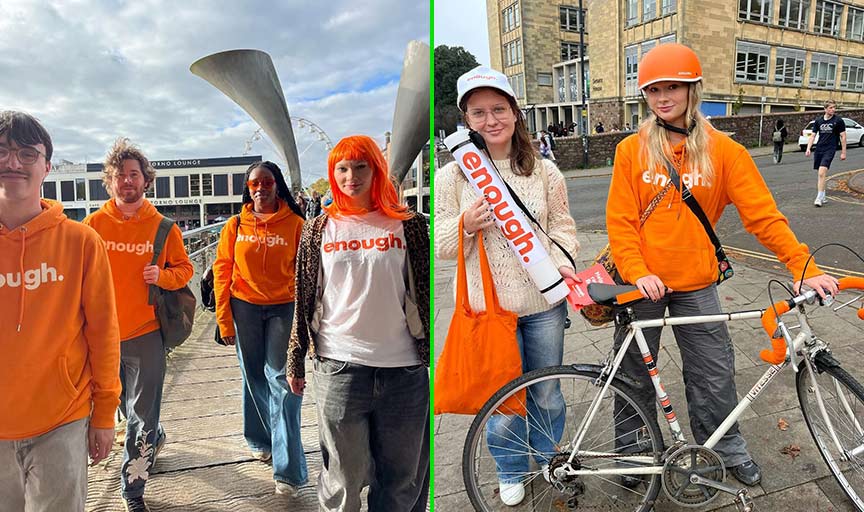
Non-profit organisation Enough has set out to do something big: end sexual assault through the means of DNA testing kits. The little packets which are currently being handed out to University students in Bristol can pick up a perpetrator’s semen, saliva or persistent touch (sweat) and are advertised as a simple and discreet alternative to professional rape kits. Yet, the company has since come under intense scrutiny after multiple experts slammed its claims as lofty and noted that the kits might actually pose a risk to rape survivors.
Sexual violence within the UK and beyond is endemic. Roughly 86 per cent -of women aged 18 to 24 said they had been sexually harassed in a public space, while around 798,000 women across England and Wales are raped or sexually assaulted every year.
It’s due to these “intolerable” numbers that Katie White and Tom Allchurch have decided to found Enough, a company that believes DNA testing could help reduce these figures.
Enough has handed out 7,000 of them in Bristol, saying that the possibility of quickly and easily being exposed may act as a deterrent to potential perpetrators.
@enoughtoendrape This is enough to end rape. myenough.com for more info #enoughtoendrape
♬ original sound - enoughtoendrape
Yet, multiple legal experts such as Bristol solicitor Ian Kelcey, who was interviewed by the BBC, have warned that the kits might provide false hope to victims.
He called Enough’s approach “fatally flawed” and argued that the kits may be ineffective, even if the information they provided is accurate.
“There is going to be no continuity of the sample,” he said. “The risk of contamination to my mind is enormous and I think that would kill it at the first hurdle,” questioning if rape kits should even be conducted in a home setting.
There is a lot to be said for and against the standard sexual assault forensic exams. On the downside, they include invasive vaginal, anal, or penal exams and take several hours, in which the victims are advised not to shower, use the restroom, change clothing, or clean up the crime setting to prevent damaging evidence.
On the positive side, these tests are carried out by professionals and secure essential evidence such as rips, bruising, or tearing on genitals that indicate if excessive violence was used during intercourse.
Furthermore, they also include an examination of clothing and the crime scene that provides further evidence for the nature of the interaction.
“I think people are being lulled into a false sense of security because I don’t think there’s much likelihood that these would evidentially be admissible,” Kelcey said of the rape kits.
He stressed that the main issue in most rape cases was the lack of consent, something the kits could not prove was absent.
View this post on Instagram
However, Enough is aware of this criticism, marketing its kits as a mid-route between pressing charges and staying inactive.
“It is only really legal experts that take it down the whole chain and say ‘well it is not a deterrent because it might not be admissible in court,” Enough co-founder Katie White told the BCC. “For a student at university, just the possibility of their DNA being held on file is quite a terrifying thought.”
The non-profit has been handing the kits out to students in Bristol since October 2024. It is also selling them online for £20 to allow people outside the city to access them. Additionally, visitors can choose to donate a kit to someone, and anonymously share their stories of assault to the website.
White maintained that Enough was set up to validate the experiences of survivors, enabling them to pursue action, even if not through legal channels.
And a lot of supporters and experts have still rallied behind the company, noting that it provides a quick and tangible way to document an alleged offense, in a system that doesn’t offer a range of other options.
Once the test has been completed, the frozen sample can be stored at the laboratory for up to 20 years and handed to the police at any time, if the incident is reported.
Whether this means of recording instances of sexual violence is effective though, is up for debate.
