From war zones to fashion runways: Model agencies exposed for recruiting women in refugee camps


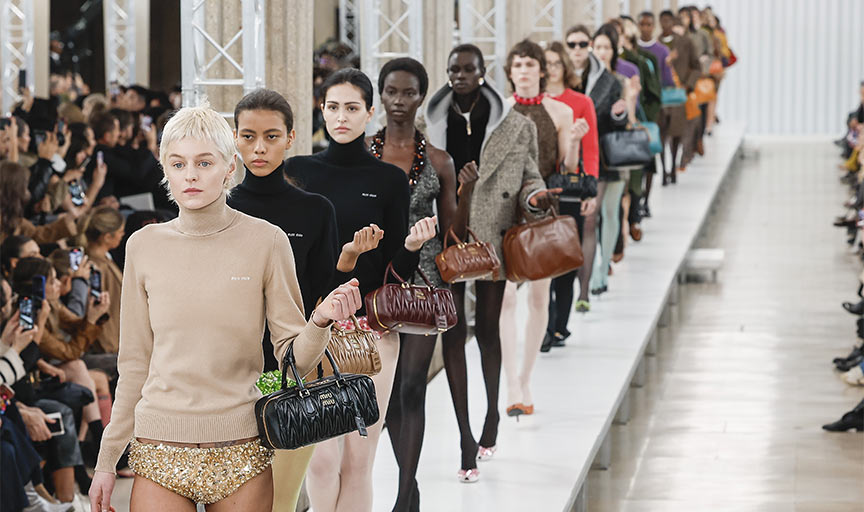
It seems as though scouting in supermarkets and shopping centres just isn’t cutting it anymore for a few of the world’s biggest modelling agencies. Instead, as revealed by The Times in a shocking new investigation, it is refugee camps they’ve been scouring for fashion’s next big thing.
In September of 2022, South Sudanese 23-year-old Achol Malual Jau left her home in a Kakuma refugee camp in Kenya and headed to London, having been promised a shimmering future and supermodel stardom status. Jau graced the runway in a beautiful golden gown, but “just five months later,” she was back in the Kenyan camp. The young woman’s career as a model had failed. Jau was then handed documents from her agency detailing a debt to them of approximately €3,000.
And she is not alone. There are dozens of similar stories. For instance, Nyawal Puot Chuol, 19, was flown to Paris Fashion Week with two other refugees, only to return home just six days later. Chuol’s physical condition was deemed too malnourished to continue working.
Fashion week requires back-to-back castings, extravagant shows at all hours, and mandatory after-parties through the night. Chuol’s frail figure, while initially attractive to the agency, ultimately left her too weak to take part in such an intensive process. It is hardly surprising, given residents at Kakuma live on food rations.
“I didn’t have a chance. It felt really bad. I don’t have power.” — Nyawal Puot Chuol
Nyabalang Gatwech Pur Yien, 24, signed a contract in English with London agency Select Model Management. Yien speaks Nuer, a tribal language, and so the terms were “barely understood.” She returned to Kakuma after just 17 days, owing Select €2,769.46. Her debts remain unpaid.
“We’re not trash, we are humans, we need to be treated like humans, with dignity.” — Nyabalang Gatwech Pur Yien
To understand the process, which as a former model who has worked within the industry is something I can do, it is common practice for agencies to financially assist models when they are just starting. Many models come to the industry with little money, often as teenagers. The problems arise when all those expenses (flights, hotels, meals) rack up to more money than the model is actually earning—or will ever earn, for that matter.
The truth is, runway shows are not where the money’s at for models. You participate in shows so that the audience, laden with photographers, journalists and representatives from high fashion brands, will notice you, and book you for higher-paid work in the future, predominantly campaigns and advertisements. Building a career takes time, but, as global model India Tuersley commented, “refugees are under make or break pressure.” They are being thrust straight onto the runway and expected to fly.
Tuersley, who graciously agreed to speak with SCREENSHOT, went on to explain that “for very few models it’s an overnight success. It can take months or even years to build up your portfolio and experience to begin profiting from the industry. [When I started,] I was fortunate enough to make the investment.” Most young models have the financial fallback of their families if their career doesn’t take off. Refugees, on the other hand, do not have this privilege.
These men and women are extremely financially vulnerable. They have no experience understanding debt, tax or the complex financial paperwork they are being given. In the Kakuma camp, 51,000 individuals receive cash assistance of $1 a week per household member, and as Jau discovered, it is much harder to make money as a model than you’d think. She told The Times: “I worked hard but came back with no money… I have nothing.”
@screenshothq It seems as though scouting in supermarkets and shopping centres just isn't cutting it anymore for a few of the world's biggest modelling agencies. Instead, as revealed by The Times in a shocking new investigation, it is refugee camps they've been scour#londonfashionweeknretugeething. #modelcasting #fashionweek #londonfashionweek #refugee #UNHCR #modellingagency #highfashionmodel #highfashionmodels #lfw
♬ Stargazing (Slowed + Reverb) - Marcelo De Carvalho
Renowned model scout Jane Duval spoke with me about whether this particular scouting move from such agencies was more about “creating a story and gaining attention rather than changing someone’s life for the better.” She noted: “They want to look like they are saving them.” Individual scouts are under huge pressure to out-scout their peers and offer brands the hottest new faces for the runway. It is questionable whether a long and prosperous career for the model is always their priority.
Agencies have defended their actions as humanitarian, a way to give refugees the ‘chance of a lifetime’ or an attempt to make catwalks ‘more diverse’. Many hail success stories such as former Kakuma refugee Adut Akech, 23, who now works for the likes of Vogue and Victoria’s Secret, and Alek Wek, 46, who fled Sudan as a teenager and has since become an icon of the fashion industry. But these are the successful few.
“The successful models, they just keep quiet about the bad things.” — Nyabalang Gatwech Pur Yien
Mari Malek, a model and former refugee who now lives in New York, said: “It is time for the fashion world to wake up and ask themselves at what cost to young African lives their diversity and inclusion policies are fulfilled.”
Tuersley believes that “if the right system was in place that could properly protect the models, then it could be a really positive movement.” Agencies need “greater transparency, from translating contracts to being realistic about their expectations. No models should be returning home with debt.”
Most refugees have already lost too much. They have run from war zones and arrived in camps in extreme poverty. Modelling agencies, on the other hand, have power, privilege and substantial resources. They know that the perception of the fashion industry as glamorous is highly lucrative. The cost of this pipe dream is ultimately not paid by them but by the refugees—by highly vulnerable and deprived people who, if offered stardom, should also be offered stability.
