Social distancing is not new to animals. Here’s what humans can learn from them


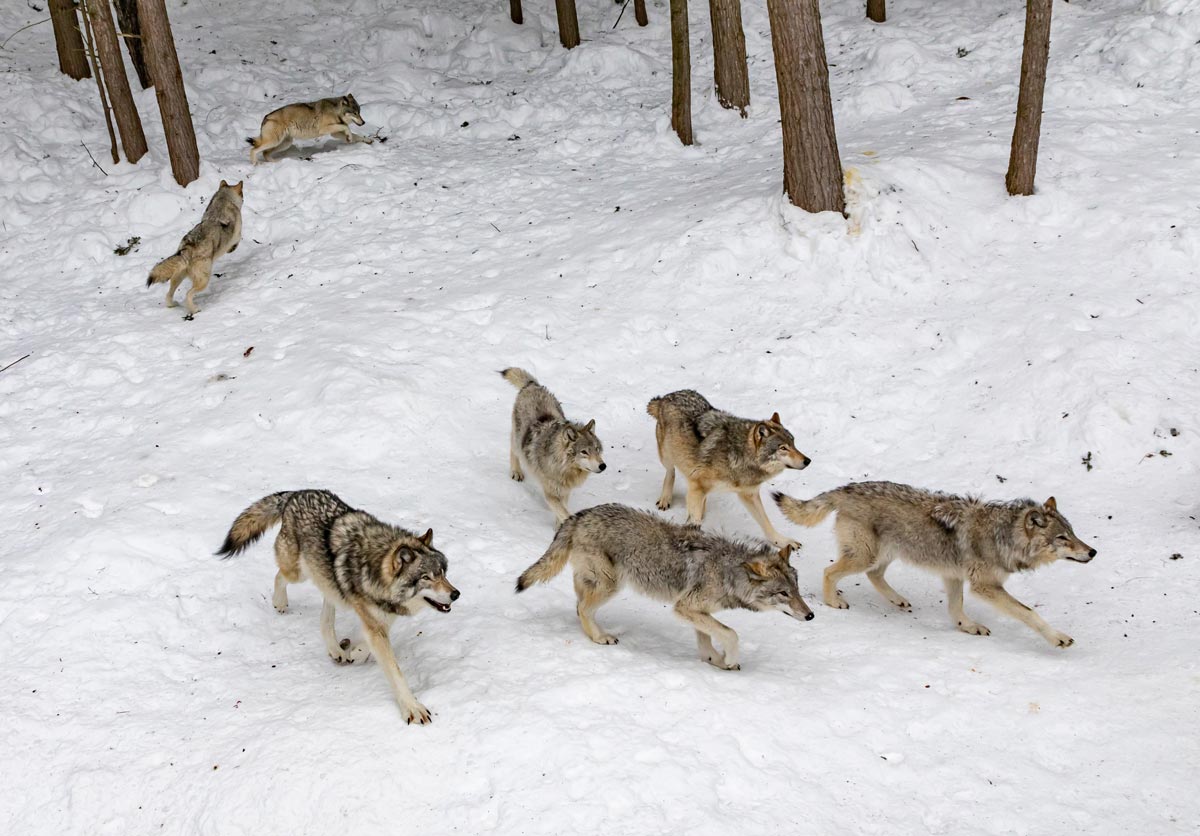
‘Social distancing’, the term we are all very familiar with now due to COVID-19, is still very new for us—but it’s been going on for a long time in the animal kingdom. According to a recent study in Proceedings of the Royal Academy B, researchers observed how members of different species behaved around each other in the face of disease. Interestingly, evidence shows that animals have been reducing the transmission of disease in the same way we are now through social distancing for decades. Here’s what we can learn from them.
Animals that stay in groups are usually the first ones to adopt some socially distancing measures. Because living with many other animals of the same species makes it easier to capture prey or avoid predators, social animals also face a heightened risk of infection from contagious diseases. Those who socially distance during an outbreak are those that instinctively increase their chances of producing offspring. These actions are what disease ecologists call ‘behavioural immunity’, as animals can’t make their own vaccines like we do, so instead prevent it by changing how they live.
There is a strong correlation between the animals that, like humans, need community for a healthy mental state. These types of animals are less likely to isolate themselves, if even at all. Grey wolves for example, do not separate themselves from a wolf in the pack that has been infected with sarcoptic mange, because the harm of the disease is outweighed by the long term survival benefits of remaining as a pack.
Spiny lobsters have a very different set of actions to benefit their species’ long term health, they detect and avoid infected group mates that have the Panulirus argus virus 1, which kills more than half of the juvenile lobsters it infects. Young lobsters in general are easy prey for the virus because the animals are so social and share dens, corals and rocky crevices along the ocean floor.
In the early 2000s, a study was carried out to reason why some young lobsters were left to be alone. After testing the researchers found that these lobsters were infected with the virus 1 and that they had been abandoned by their fellow lobsters. These ocean crawlers spot afflicted ones by using a sniff test, which detects chemicals in infected lobsters’ urine by smelling it through the water.
These social distancing strategies sometimes mean maintaining social ties, for protection like the wolves mentioned before, or company. Another highly social animal is the mandrill—a primate that can be found in groups of tens to 100s in tropical rainforests of equatorial Africa. These groups are made up of a mix of extended family members that frequently groom each other, which deepens their social bonds as well as improves hygiene, but these behaviours change when sickness is around.
Grooming is avoided between infected and non-infected mandrills, and infections are detected again by their keen sense of smell, however, a study led by scientist and behavioural ecologist Clemence Poirotte shows that certain close relatives continued to groom each other regardless of the risk of contamination, with the sole aim of maintaining unconditional ties with relatives to reap the long-term benefits.
Humans are in the same boat as animals, and we have a long evolutionary history of infectious diseases. In the result of this history, we have built our own forms of behavioural immunity, like the feeling of disgust we have for dirty or over populated environments.
Over the years, we have developed medications and vaccines in order to help prevent the diseases we come into contact with, but time has come to introduce us to a novel disease, COVID-19. An unpredictable virus that needs time to be observed—Dana Hawley, a biologist at the Virginia Polytechnic Institute spoke to Science Magazine about social distancing in the animal kingdom, and said “a big takeaway is that social distancing works. Anytime we see a behavior that has evolved again and again in unrelated types of animals, that’s a signal that even though social distancing is a very costly behavior, the benefits clearly outweigh the costs.”
