What is ‘YouTube voice’ and what does it sound like?



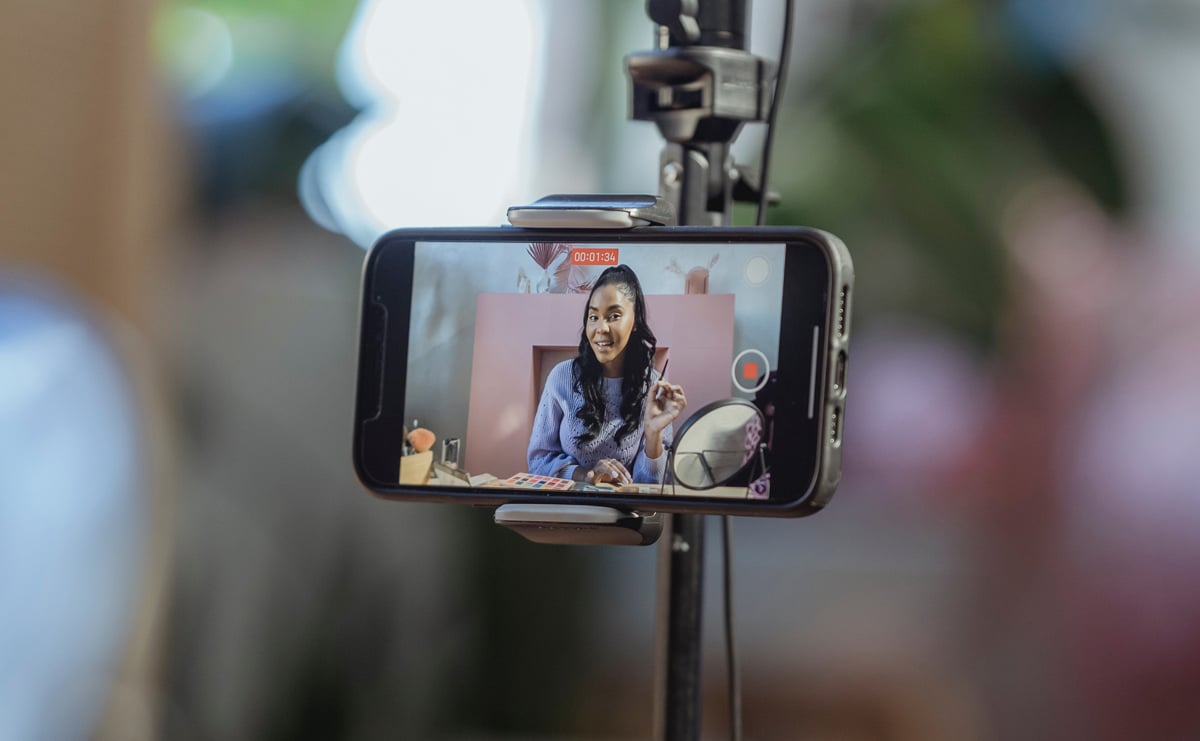
In 2015, The Atlantic writer Julie Beck talked to Naomi Baron, a professor of linguistics at American University who studied electronically mediated communication, about the reason behind why all successful YouTubers sound the same in their videos. Not because of their accents or the sound of their voices but because of the way they were talking.
In response, Baron listed and described the linguistic components of YouTube voice—and the term was born. But what did she mean by that? How has the attention-grabbing trick evolved since then?
What is YouTube voice?
If you’re partial to watching YouTube vlogs (not the silent type), you’ve probably noticed that the most popular way to introduce oneself on the platform has been a single phrase “Hey guys!” usually followed by “What’s up?” or “How’s it going?” In fact, the company went as far as to track the data over the past decade. “What’s up?” and “good morning” come in second and third, but “hey guys” has consistently remained in the top spot.
But YouTube voice is about more than just having the right go-to opening sentence. According to Baron, the linguistic components of YouTube voice consist of: overstressed vowels, sneaky extra vowels between consonants, long vowels as well as long consonants, and aspiration. Let’s have a closer look at each of these, shall we?
Overstressed vowels
Nowadays, people tend to not pronounce certain vowels—they’re un-emphasised and neutral, and just sort of hang loosely in the middle of the mouth, making an ‘euh’ sound, regardless of which vowel it actually is. This is called the schwa. When you make the effort to actually pronounce a vowel that is usually a schwa, you’re actually trying to emphasise the word you’re saying.
For example, “If I say the word ‘exactly’, you don’t really know what that first vowel is. ‘Euh,’” Baron told The Atlantic. “If I say ‘eh-xactly’, you have the sound ‘eh’, like in the word ‘bet’.”
Sneaky extra vowels between consonants
YouTubers are also prone to adding a little vowel between consonants to elongate a word. By adding an extra syllable to the word, it emphasises the word in turn. “There’s a name for this: epenthetic vowel,” Baron precised.
Long vowels and consonants
Stretching out vowels is another common way of emphasising words—sometimes it’s obvious, and clearly done on purpose. Other times, like in many of these YouTube vlogs, the vowels are just sliiightly longer than normal. And the same can be done to consonants, especially those at the beginning of words.
Aspiration
An aspiration can be identified when you say a precise word while holding a finger in front of your lips. If you feel a breath of air on your finger while saying the word, chances are it’s what is called an aspiration. There’s normally one on the letter ‘k’, even if you say it normally, but if you huff and puff a little more, that makes the word stand out. You can also hear this with ‘p’ and ‘t’ sounds.
Popular YouTubers aren’t the only (nor first) ones to adopt the voice—people employ these devices in speech all the time. But they generally do it to grab the listener’s attention, and when you’re just talking to a camera without much action, it obviously takes a little more to get, and maintain, that attention. On the platform, top content creators know how to engage an audience.
There are other factors at play here, too. YouTubers’ monologues often speed up and slow down in order to get your attention. Elongating certain words helps change up the pace. People also tend to move their heads and hands a lot in these videos, raise their eyebrows, and open their mouths wider than necessary. Anything to captivate their audience.
If you’re still unsure of what YouTube voice entails, check any video posted on the platform by Hank Green.
From YouTube to TikTok voice
Ever since TikTok rose to fame around 2020, YouTube voice has proliferated there as well. “Most instances were essentially 60-second versions of YouTube videos, dudes pointing to an image or a graph while explaining whatever factoids went alongside it, or giving scripted hot takes on some depressing political event. Popular users like @onlyjayus iterated on the voice by adding visual eye-grabbers like walking into the frame, holding their camera up to a bathroom mirror, then giving a clearly rehearsed spiel,” explains Rebecca Jennings in Vox.
In a way, because of TikTok’s shorter video format, YouTube voice has already shifted into TikTok voice—a version more sped-up and less dramatic. Although YouTube voice aims to keep things casual, on top of making it more engaging to listen to, TikTok voice manages to do so on a whole new level. This is because, unlike top YouTube creators, most users on TikTok aren’t trying to sound like content creators. They’re just doing it unknowingly, and slightly less dramatically.
@hankgreen1 Still not sorry.
♬ original sound - Hank Green
TikTok voice is nothing less than YouTube voice’s rightful successor. Just like gen Zers took Y2K fashion and reinvented it their own way, they’re now bending the rules of linguistic tricks to redefine which are acceptable or not. And I don’t know about you, but I’m pretty happy with YouTube voice disappearing for good.
