What the Gillette advert means for the fight against toxic masculinity


Last week, Gillette launched a new ad campaign critiquing toxic masculinity—and the responses have been mixed, to say the least. So-called men’s rights activists have criticised the advert for being too preachy and critical of all men (#notallmen). The usual right-wing trolls—Tomi Lahren, Paul Joseph Watson, Piers Morgan—have called for boycotts of Gillette and for its parent company, Procter & Gamble, to apologise. The fact that such commentators love to label the millennial generation “snowflakes” for caring about identity politics and social injustice, while getting viscerally offended by a two-minute advert is, apparently, an irony lost on them.
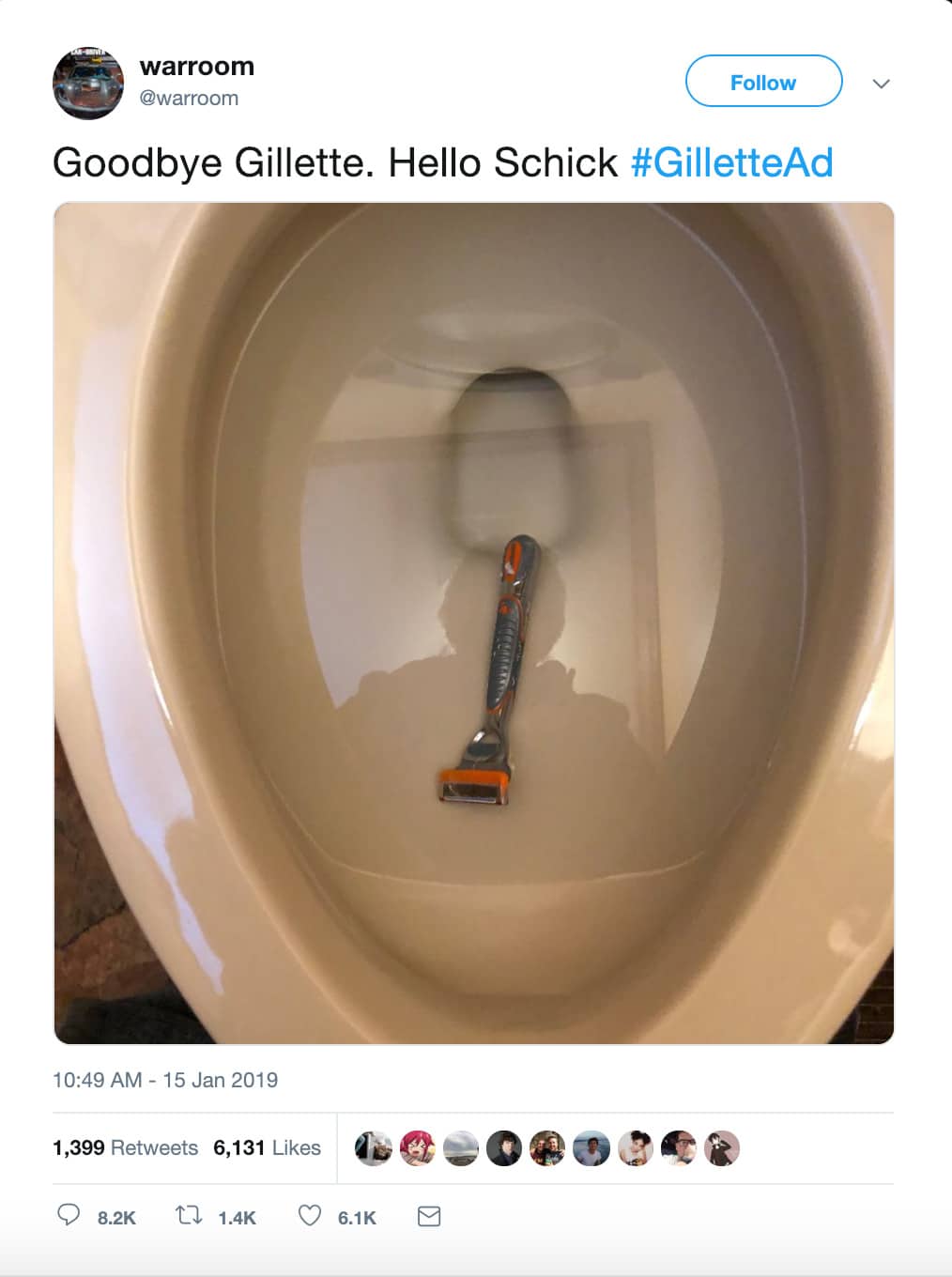
One Twitter user decided to flush his razor down the toilet in protest. The replies to his outburst were not too kind: “My man here ruining his plumbing because a commercial suggested that maybe he should be nicer.” On YouTube, at time of writing, the video has 656,000 likes and over 1.1 million dislikes.
The advert quotes Terry Crews, one of the leading examples of a more sensitive and considerate masculinity: “Men need to hold other men accountable.” As Rebecca Reid points out in her Telegraph column, “Men have just been told they’re not perfect by Gillette – that’s why they’re so angry.” The replies to the video on Gillette’s Twitter are, in equal parts, heartwarming and horrifying, many point out that the negative response is precisely why such a prominent advert is needed.
Because what does the advert actually say? How many people’s reactions were tempered by other reactions? Looking closely at the campaign itself, it’s hard to disagree with what they’re campaigning for. Although, perhaps, it’s a fault of the advert for not articulating the message clearly enough.
The advert marks thirty years of Gillette’s tagline, The Best A Man Can Get. This campaign, the company explains, is meant to interrogate that statement. “It’s time we acknowledge that brands, like ours, play a role in influencing culture. And as a company that encourages men to be their best, we have a responsibility to make sure we are promoting positive, attainable, inclusive and healthy versions of what it means to be a man.”
“From today on, we pledge to actively challenge the stereotypes and expectations of what it means to be a man everywhere you see Gillette. In the ads we run, the images we publish to social media, the words we choose, and so much more.”
This seems like a brand becoming genuinely aware of itself and the world around it; Gillette has a platform for communicating with a large audience and is committing to doing so in a thoughtful and responsible way, right? This seems to be reinforced by a pledge to donate $1 million per year for the next three years to charities with ”programs in the United States designed to inspire, educate and help men of all ages achieve their personal “best” and become role models for the next generation.”
It has partnered with Building A Better Man project, which seeks to reduce violent behaviour in young men, and The Boys and Girls Club of America, which helps young men develop better social and communication skills. The next ad in the series, no doubt in anticipation of the Super Bowl, partners with NFL rookie Shaquem Griffin: Your Best Never Comes Easy, reads the tagline. “From earning defensive player of the year in college, to suiting up for the Seattle Seahawks, hard work and a dedicated father have helped Shaquem overcome any obstacle”—what’s wrong with that?
Of course, there is also a cynical perspective one can take. P&G is a billion dollar company—its 2017 revenue was $65.05 billion—who could be seen to be cashing in on the current political moment of MeToo. The longterm buzz of this campaign is likely to outweigh any immediate backlash, as happened with Nike and its Colin Kaepernick partnership.
And, in an altogether misplaced critique, Piers Morgan pointed out that Chrissy Teigen, a spokesperson of Gillette’s line of razors for women, Venus, had posted transphobic and problematic tweets in the past: why weren’t they addressing this, he asked? Where’s the consistency? This is a valid question, but it doesn’t really detract from the core message of the new campaign, and for notorious transphobe Piers Morgan to be calling someone hypocritical for transphobia is taking both hypocrisy and obliviousness to new heights.
What is the best a man can get? Surely, calling for compassion doesn’t inherently sacrifice one’s masculinity? And to stand up against bullying and harassment—without using the old line “boys will be boys”—isn’t really too much to ask?
