OK Boomer: Is this the catchphrase of a cross-generational war?


In an audio clip that went viral on the video sharing app TikTok, a white haired man in a baseball cap and polo shirt who met the age of fitting into the ‘Baby Boomer’ category (roughly between 1946 and 1965) declared that “The millennials and generation Z have the Peter Pan syndrome, they don’t ever want to grow up.” Without knowing it, the quick-to-lay-a-label-man was about to really ‘meet’ his younger generations. What happened exactly, and why is half of the world’s population so damn offended?
@linwolfgang mom can you pick me up the old art teacher is going at it again #foryoupage #genz #foryou
♬ -
Arguably this happens within every generation, but for a long time now this cross generational dialogue between Baby Boomers, millennials (1980-1996), and now gen Zers (1996-2015), has had its fair share of heated moments. Things feel a little different now though, somehow. To start, generations are taking other generations to court for defensive communication, and fundamentally, a lack of willingness to understand each other’s viewpoint. Woke culture is pretty downright aggressive, which is contradictory in itself when it comes to what the term means. That being said, the opposing party, the people too bred into narrow-minded thoughts, are being just as aggressive. Listening and learning from our elders seems to be turning a leaf in 2020, particularly within a 30 to 40 year age gap between people.
Millennials say Boomers are ‘out of touch’. On the other hand, Boomers claim that millennials are ‘killing’ once stable industries, like breakfast cereal and luxury goods, by saving money and spending less. Whereas Boomers have, according to Bruce Cannon Gibney’s A Generation of Sociopaths, essentially “mortgaged the future for their own short-term gain” and therefore led climate change to a, excuse the pun, climactic state.
Gen Zers are portrayed as being addicted to their phones and ‘intolerant’ of their elders. According to an international study commissioned by WP Engine in partnership with The Center for Generational Kinetics, our generation is fueled by technology in all facets of their life. Chief Marketing Officer at WP Engine, Mary Ellen Dugan, stated in response to the study that “Gen Z is well on its way to becoming the largest generation of consumers by the year 2020.” Around 55 per cent of gen Zers can’t comfortably go more than a few hours without an internet connection, and they have grown up in the hyper personalised world of targeted advertisements and social platforms. As a result, they are willing to trade privacy for personalised experiences.
On a polar opposite side of the spectrum, Boomers see physical shop fronts as their go-to when it comes to consuming goods. In all honesty, the differences are understandable—but will we, and shouldn’t we all instead strive to find a common ground on societal matters such as environmental health and global politics among other things that the younger generations are protesting for?
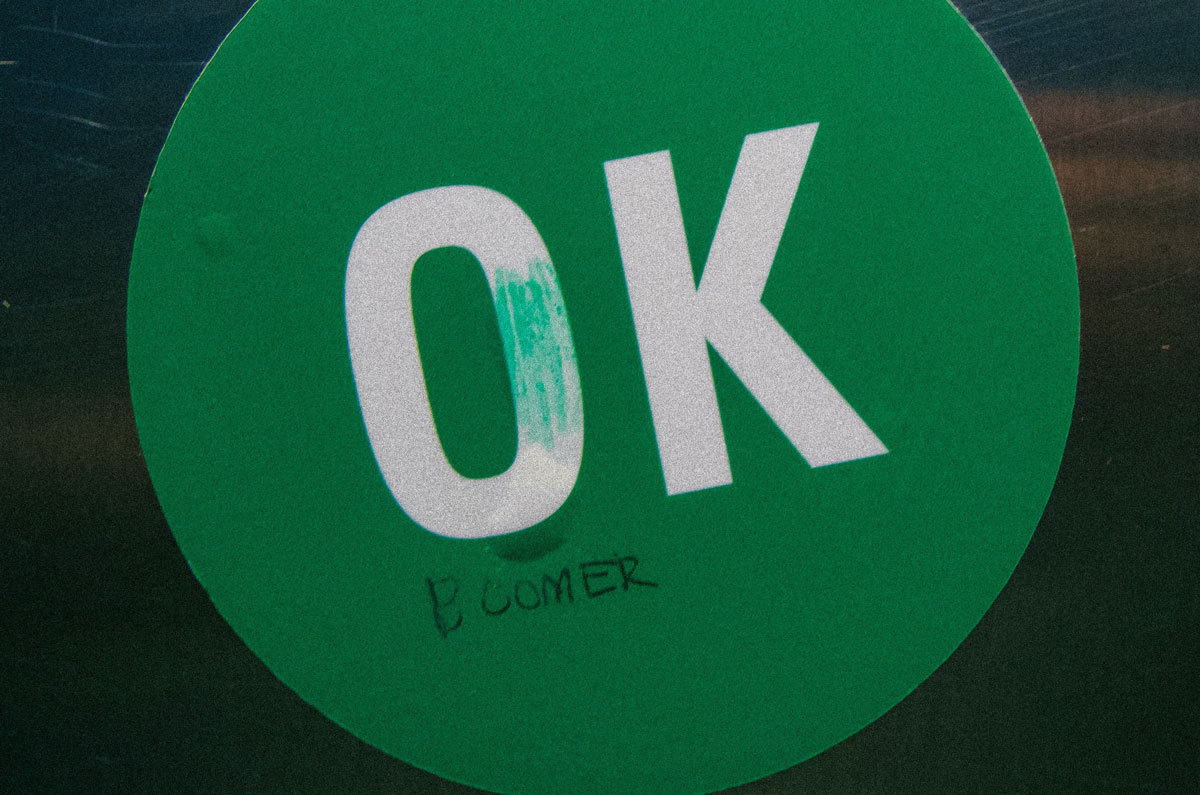
Unfortunately as the years pass, reaching a middle ground is looking near impossible. There is a repetitive back and forth of arguments and blame, which has led to defensive rejection all round. This is where the meme phrase “OK Boomer” came in, a phrase that is meant to be cutting and dismissive, suggesting that the conversations between these generations have become so unproductive that the younger generations are ‘over it’. OK Boomer is, effectively, a door in the face with a side of an eye roll.
Where does the “OK Boomer” meme come from?
According to Vox, “OK Boomer implies that the older generation misunderstands millennial and Gen Z culture and politics so fundamentally that years of condescension and misrepresentation have led to this pointedly terse rebuttal and rejection.” OK Boomer has, unsurprisingly, provoked backlash from Baby Boomers, many of which have misread the meme. However, that misreading also feeds the meme, because Baby Boomers that fail to understand the point of what OK Boomer stands for, is essentially the point of OK Boomer itself.
Vox continues by explaining that “It’s important to understand that what really lies behind the meme is increasing economic, environmental, and social anxiety, and the feeling that baby boomers are leaving younger generations to clean up their mess.”
What does “OK Boomer” really mean?
The OK Boomer song used as the backdrop to all those TikTok videos define Boomers as racist, fascist Trump supporters with bad hair. While this might be true for a specific part of the generation, we all know that it’s not always the case, and that a mass labelling system has not and will not ever work when it comes to societal differences.
Most meme videos in this context reference generalised conflicts such as elder generational judgement when it comes to things like gender expression, financial choices or leisure activities. However, the broader background to these videos is the perceived irony of Boomers ‘nitpicking’ younger generations, when it was actually the Boomers’ own choices that created the socioeconomic landscape that millennials and gen Zers face today.
In a New York Times article, Joshua Citarella, a researcher who studies online communities, is quoted in saying that “Gen Z is going to be the first generation to have a lower quality of life than the generation before them.” Teenagers today find themselves, he added, with “three major crises all coming to a head at the Gen Z moment.” For example, essentials are more expensive than ever before, 50 per cent of our income goes towards rent, and hardly anyone has health insurance.
Jonathan Williams, a 20 year old college student who produced the song ‘OK Boomer’ told the New York Times that “anyone can be a Boomer with the right attitude,” adding the description: “You don’t like change, you don’t understand new things especially related to technology, you don’t understand equality. Being a Boomer is just having that attitude, it can apply to whoever is bitter toward change.”
There are some harsh realities within society today, and this argument is not going to simply go away. Thankfully, gen Z isn’t about to step down when it comes to fighting for a change in attitudes, one that the world so desperately needs. The future is looking up, are you ready for it Boomers? You don’t have to be.
