From origami robots to password pills, edible electronics are the future of biotechnology



Do you often find yourself working your nine-to-five job on a computer, later arriving home to whip out your five-to-nine laptop to binge-watch Netflix instead? If so, have you ever felt the urge to yeet your digital devices across the room or even Google ‘what would happen if I ate my phone?’ at 3 am? Well, either way, scientists across the world are currently on a quest to make the latter possible. Introducing edible electronics, a field of research with the vision to serve humans computers at their dinner tables in the near future.
Why would anyone want to eat technology?
For starters, think of our gastrointestinal (GI) tract as the primary interface between the external and our internal environment. This provides a huge surface area for digital devices to reside and deliver drugs, measure pH levels, monitor our health and even perform complicated surgeries. Edible electronics aim to administer these devices orally, hence making them non-invasive, using materials that are ingested in common diets.
“The idea is for the patient to consume a pill that encapsulates the device,” Christopher Bettinger, who has been working on biodegradable electronics for several years at Carnegie Mellon University in Pittsburgh, told Chemistry World. “The pill will have a form that is similar to a vitamin. The device will then undergo programmed deployment in the GI tract or the small intestine—depending upon the packaging—after which the battery will activate.”
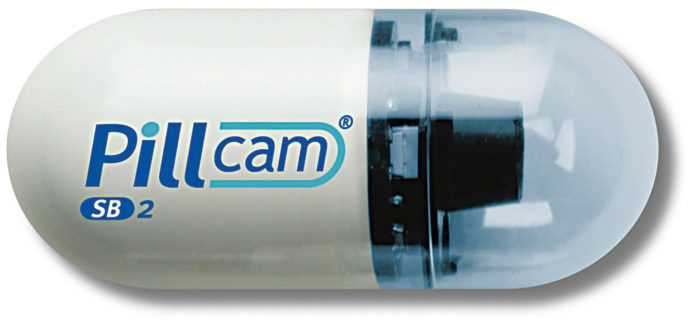
The technology in question has countless applications. First comes a process called capsule endoscopy, where you would be made to ingest a camera embedded in a pill (similar to the one in the image above). It would then take pictures of your GI tract as it passes through your system, therefore eliminating the need for tube insertions altogether. The possibilities of this application could even be extended to a future where doctors could observe a patient’s internal health remotely without the necessity of a hospital visit. This revolution, of course, opens up a conversation about ethics in the upcoming field, but if successful, it could enhance telehealth significantly.
Edible electronics also harbour the potential of performing complicated internal procedures, where the tiny robot surgeons could later exit through the digestive tract, and even deliver drugs to specific locations in the body. In the latter case, the ingested device could head to the designated spot and release medication at the right time. Oh, you forgot to take your pills? That’s so 2022 of you.
Origami robots are yet another edible innovation on the list. Unfolding themselves from a swallowed capsule, these mini robots—demonstrated by the researchers at MIT, the University of Sheffield, and the Tokyo Institute of Technology—are designed to steer themselves with the help of external magnetic fields and crawl across the stomach wall to patch wounds and remove harmful materials that one may have accidentally ingested.
Then comes the alternate applications of the technology. Back in 2013, US smartphone firm Motorola introduced an edible “authentication vitamin” pill—capable of turning you into a human password for all of your digital devices. When ingested, the gastric juices would act as an electrolyte to activate the pill, which will then trigger it to transmit an 18-bit, electrocardiogram (EKG)-like signal from your insides. This would automatically unlock your smartphone and other gadgets as long as the edible device is still inside your body.
At the time, Motorola’s authentication pill came with its own uncertainties. How much would it cost? Will you need a prescription to purchase it? Does the pill really stop emitting a signal after it’s expelled out of our bodies? Despite the company deeming the edible device “medically safe” enough to swallow up to 30 times a day, it never hit the market. Officially, at least.
Ingredients to a green future
Every year, more than 3,500 people of all ages in the US swallow button batteries, the small silver chips used to power everything from toys to musical greeting cards. While most of them pass through our digestive system and are ultimately expelled out, some get embedded in the inner lining of our stomach, in turn, causing serious internal damages—not to mention the initial choking hazards and heavy metal poisoning.
But batteries aren’t the only form of toxic indigestion humans have been enduring to date. The optical drive, the part of the computer used to read and write data on CDs, is covered with a light-sensitive substance called a photoresist application. When scientists exposed the substance to mice and rabbits, it caused inflammation around their eyes and skin, as well as weight gain. Flame retardants, that keep your electronics from combusting easily, are further proven to disrupt fertility and hormones when they’re burnt or crushed as waste.
Simply put, the ingestion of technology can be fatal. They’re not exactly delicious or nutritious either, so to speak. In terms of edible electronics, this is exactly where researchers need to get inventive.
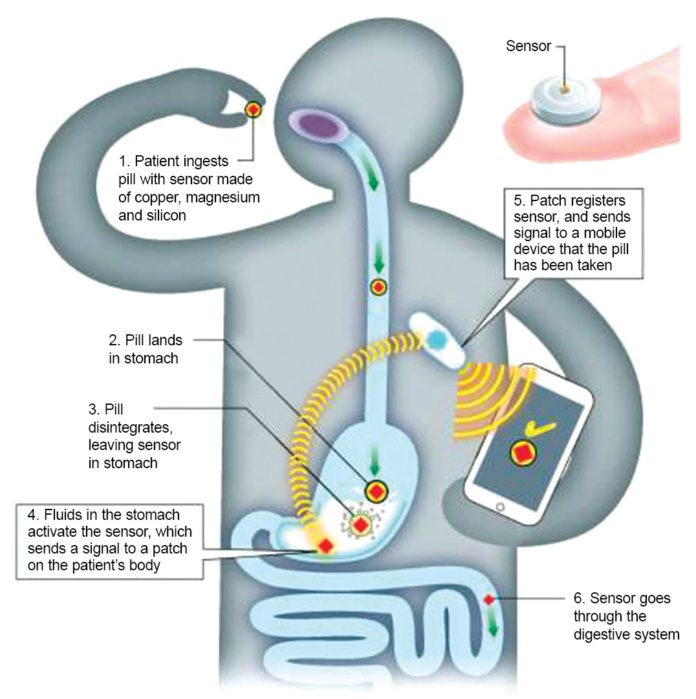
As of today, biodegradable polymers like silk fibroin, caramelised sugar, pea protein and apple extract are being trialled as mediums to contain electronic materials. Gold and silver, which are inert and already permitted as food additives, are also being tapped as conductors. Gatorade and Vegemite additionally have the potential of being used in the process, given how they contain charged electrolytes. Certain proteins, DNA, pigments and dyes are also on the list as they’re being explored as semiconductors—alongside small amounts of silicone.
With prototypes already existing for astronauts, firefighters and football players to make sure they do not overheat, edible electronics are set to be the future of biotechnology as we speak. Microchip and dip while we wait, anybody?
