‘I couldn’t see anyone like myself in this space’: meet the South Asian gen Zers unapologetically owning their narratives


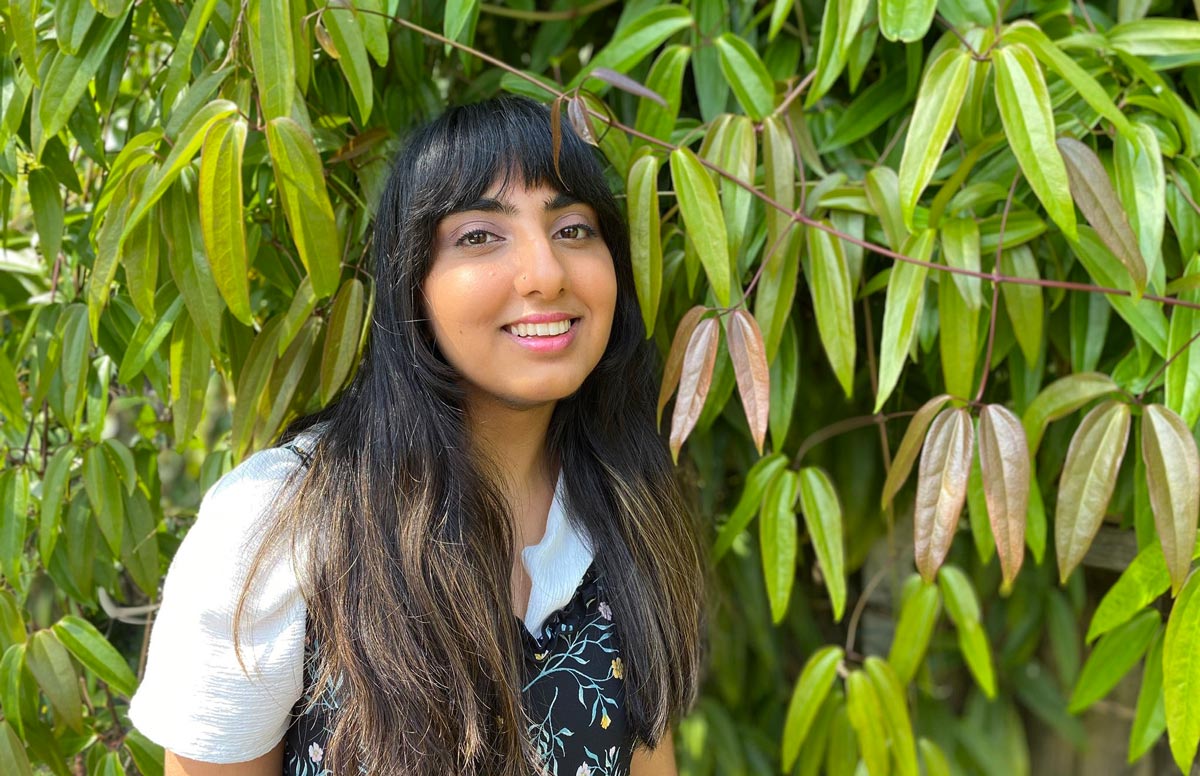
When Asyia Iftikhar first decided to pursue the arts—and study the Classics—she did it at the risk of upsetting her parents. Coming from a traditional British-Pakistani family, she was brought up with certain expectations—focus on academics, hang out with parent-approved friends and pursue a career in the sciences. Now a journalist, Iftikhar wrote about her decision to pursue the arts as a South Asian woman in Metro, a national publication that helped her story reach thousands of readers.
But while publications like Metro are read in almost every household in the UK, seeing names like Iftikhar’s in the byline—and reading the stories she writes—is far less common. In a media industry that pigeonholes writers of colour into solely exploring topics around identity and trauma, the journalist shared that she has struggled to constructively talk about her own experiences without being put into a stereotypical box—one that positions young South Asian activists in a battle between their heritage, which is widely considered problematic, and a future that is often dictated by outside assumptions of who they should be.
That’s not to say these harmful narratives don’t exist within South Asian culture too. Non-binary marine biologist and filmmaker Jasmine Qureshi distanced themselves from their traditional Muslim beliefs and mixed Indian-Pakistani-Portuguese family after growing up and hearing that the community they belonged to had no place for queer people. Working in the conservation industry in the UK—which is largely dominated by economically affluent white people—added to this ostracisation as Qureshi shared with SCREENSHOT that they felt stuck between a rock and a hard place.
View this post on Instagram
“I felt like I could be comfortable with nature, but that extra added layer of feeling like I don’t belong has led to discomfort, the sheer lack of diversity within the conservation industry almost makes you feel like you’re losing your own sense of identity in order to assimilate,” they said. But their own struggles with finding their place has made it all the more important for Qureshi to be seen in their work. “I couldn’t see anyone like myself in this space, and because of that I almost drifted away, and I want other people to look at me and see someone like them and know they can do this,” they shared, adding that they were working on projects looking at the racism within the UK’s conservation industry in an effort to bring change. Where do you go when neither side seems to have a place for you? You make your own space—one that doesn’t see the world as so black and white, and that allows you to decide how past and present come together.
For Iftikhar, that space means exploring her own experiences with her community and all the things she wants to learn and unlearn in a constructive forward-thinking way. While she doesn’t limit herself in her writing because of what people will think, she does find herself keeping some pieces to herself. “There are certain topics my parents aren’t comfortable with me writing about, so sometimes I don’t tell them but because the journalism community can be lonely, I can’t get support from either side,” she shared.
The anonymity that the vastness of the internet can afford can be a blessing for many. Be Baaghi is an online community platform that creates a space for Pakistani women to share anonymous accounts of the ways they’ve experienced harmful traditions and also advocates for systemic change within society. Its founder initially created the platform to ensure contributors’ safety and to let their narratives shine through without the need for names. On its Instagram page, stories range from women sharing sexist encounters, being shamed for having darker skin tones or being silenced when talking about their mental health.
View this post on Instagram
“I wanted to see more representation of South Asian people in digital art. Digital art is so cool and whenever I saw text posts or illustrations of people that I really liked, I would wish that there was a piece that related to desi [the people, cultures, and products of the Indian subcontinent and their diaspora] culture more. I loved the relatability of the posts and knew that desi culture and South Asian people needed to be reflected in this medium too,” shared Be Baaghi’s founder, adding that “sharing custom made educational posts or useful resources catered to Pakistani Womxn is what I am working on at the moment.”
Despite conversations around representation becoming increasingly common, there appear to be few resources available that aim to actually help young South Asians find ways to move forward. “Because of how white the nature sector is, you almost find yourself losing your identity in order to assimilate and it made me want to go back and connect to that again,” Qureshi explained as to why they wanted to become a filmmaker. “The exploration of that narrative through the media of film is a very powerful way to influence thoughts,” they added.
Melbourne-based filmmaker Kauthar Abdulalim told SCREENSHOT she was inspired by the medium of film for similar reasons. Abdulalim’s work focuses on exploring the lived experiences of her community in Australia—calling out incidents of racism and Islamophobia while also exploring issues that young women face within our own community, often through comedy and drama. While comedy may not seem like the most obvious route to take when addressing social injustices, Abdulalim explained that she took to mainstream fiction filmmaking over typical documentaries because she wanted to share unexpected stories with her audience.
View this post on Instagram
“Fictional content would give me access to a diverse audience who wouldn’t necessarily have the same beliefs as me, and my work could challenge that and so now my main focus is fictional content. I also feel like we as Muslims and South Asians also need content that we can relate to and need to see ourselves on screen,” she said.
The truth is, we don’t need to only have sob stories in the media in order to be heard. What we actually need is effort and for young people from marginalised backgrounds to be able to decide what works for them without being talked over. By creating these platforms, these young South Asians are doing just that—being unapologetically themselves and showing others that they can be too.
