Why is gen Z lonely on the internet? A search for community and connection online



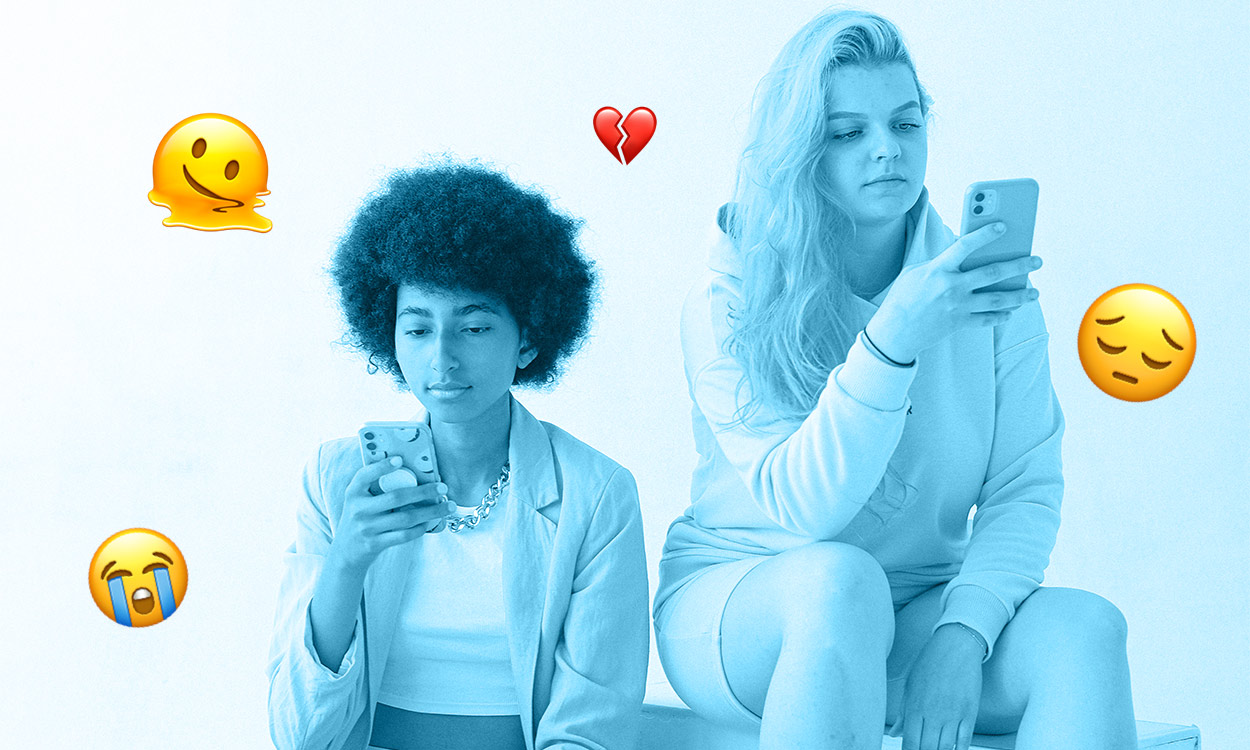
The communal loneliness that is currency on the internet is hitting gen Zers, and it’s hitting them hard. 73 per cent of gen Z report that they feel alone either sometimes or always, even though, as the first truly digitally native generation, you’d think being perpetually online would have the opposite effect.
Social media was designed as a means for people to virtually connect with friends, family members, like-minded individuals, and even colleagues. It was supposed to centre around digital spaces where people could bond and find a sense of community. But the prevalence of such platforms is now causing our generation (and it will ultimately do the very same to the one succeeding it, gen Alpha) to experience more feelings of loneliness, isolation and digital fatigue than ever before.
“It feels like long-term slower connection is just not as available today because of algorithmic discovery and shift to quick-fire video content,” says Anastasiia Fedorova, Senior Insights Editor at consumer insights and behavioural intelligence agency Canvas8.
Born between 1997 and 2012, gen Z have grown up on the internet. This entire generation is younger than Google, Microsoft and Apple, so spending most of their time online makes perfect sense to them as they came of age at a time when tech was proliferating. But spending hours scrolling each day hasn’t led to more social fulfilment as the internet would have you believe. Instead, it’s contributing to the loneliness epidemic so many of us have experienced.
It goes without saying that loneliness is a detrimental factor that can strongly affect people’s mental health. It can cause feelings of isolation, overwhelm, inadequacy and a range of negative emotions that gen Zers, sadly, feel in droves.
“We have to remember that gen Z has lived through the COVID-19 pandemic in their formative years, which has impacted the way they connect to people online and offline,” explains Fedorova. “The internet is just not a very happy place right now, and social media’s negative emotional fallout outweighs the benefits.”
Overconsuming technology, social media comparison and working/studying from home separates gen Zers further from their peers, with tech-driven lifestyles leading us to battle it out in the Wild West recesses of the internet.
“Socialised for less physical touch, gen Z looks for community online, and while that has a huge amount of benefits, an over reliance on digital communication often comes at the expense of the physical interactions proven to remedy loneliness,” notes Gabriela Serpa Royo, Behavioural Analyst at Canvas8.
Not only that, but a mix of perfection fatigue and over-curated grids is filtering into gen Z’s lonely feels. The ‘I am feeling lonely’ trend on TikTok has 11.8 million views at the time of writing, with the lyrics coming from a 1979 song by ABBA that’s been remixed and reinterpreted to feature in the background of bite-sized videos that are sometimes sad, sometimes nostalgic.
@thesongtwins IM FEELING LONELYYYYY #cupidtwinversion #cupid #dance
♬ Cupid - Twin Ver. (FIFTY FIFTY) (Sped Up Version) - FIFTY FIFTY
“On TikTok, it’s difficult to understand what’s real,” adds Serpa Royo. “Though gen Zers are grasping at connections online by sharing intimate details of their lives and insecurities, the line between performance and vulnerability is confusing.”
While the world within this trend is a mix of entertainment, intrigue and genuine confessionals, it speaks to the pervasive loneliness on the internet and the gen Zers that are falling through the cracks as a result. “That’s why gen Z are increasingly turning to more niche platforms to get that feeling of deeper and more fulfilling internet friendship,” explains Fedorova.
Online authenticity has become just another metric in producing a coherent ready-made brand, and it’s one that gen Z are frustrated with. Being a hyper-visible online user has its setbacks as the number of connections is prioritised over quality. We’ve become a society obsessed with strengthening our digital personas versus thinking about how we feel in offline spaces, and this is having consequences.
In a connected world where it takes little effort and near to no hassle to fill our time, gen Z’s pleas for intentional human connection have never been louder. We may be one of the most socially driven generations, we may have increased political awareness and aren’t hesitant to call out injustices far and wide, and we may be less prone to believing clickbaity headlines and fake news, but even with these progressive personality traits, we still fight loneliness battles behind closed doors.
It’s easy to flood Facebook with sarcastic comments, trawl the depths of Reddit threads with eye rolls, pore over Twitter clapbacks and hate like Instagram posts that try and tackle gen Z’s loneliness epidemic. “Though the media loves to spin narratives about gen Zers as content creators, a large segment of young people aren’t actually creating content on platforms like TikTok,” says Serpa Royo.
“They’re just watching. Paralysed by a fear of going viral for the wrong reasons, or worse, of being irrelevant online, many gen Zers opt out of playing the part of ‘creators’ in the creator economy, instead acting as spectators,” Serpa Royo adds.
In an era where sharing online has become synonymous with connecting, if gen Zers are set on becoming less lonely in the future then they may need to get digitally vulnerable first. “This is an expression of gen Z’s hybrid reality views: they know they’re chronically online and will be for life, but they also recognise the need to touch grass, and are keen to discover the joys of coming together and hanging out with people IRL,” notes Fedorova.
For a generation that has little to no memory of life before the internet, fighting for connection in an increasingly digitised world may be hard. But face-to-face interactions and looking up from phones a little more often isn’t a bad place to start.
