Former Virginia Tech footballer awarded $100,000 after refusing to take the knee


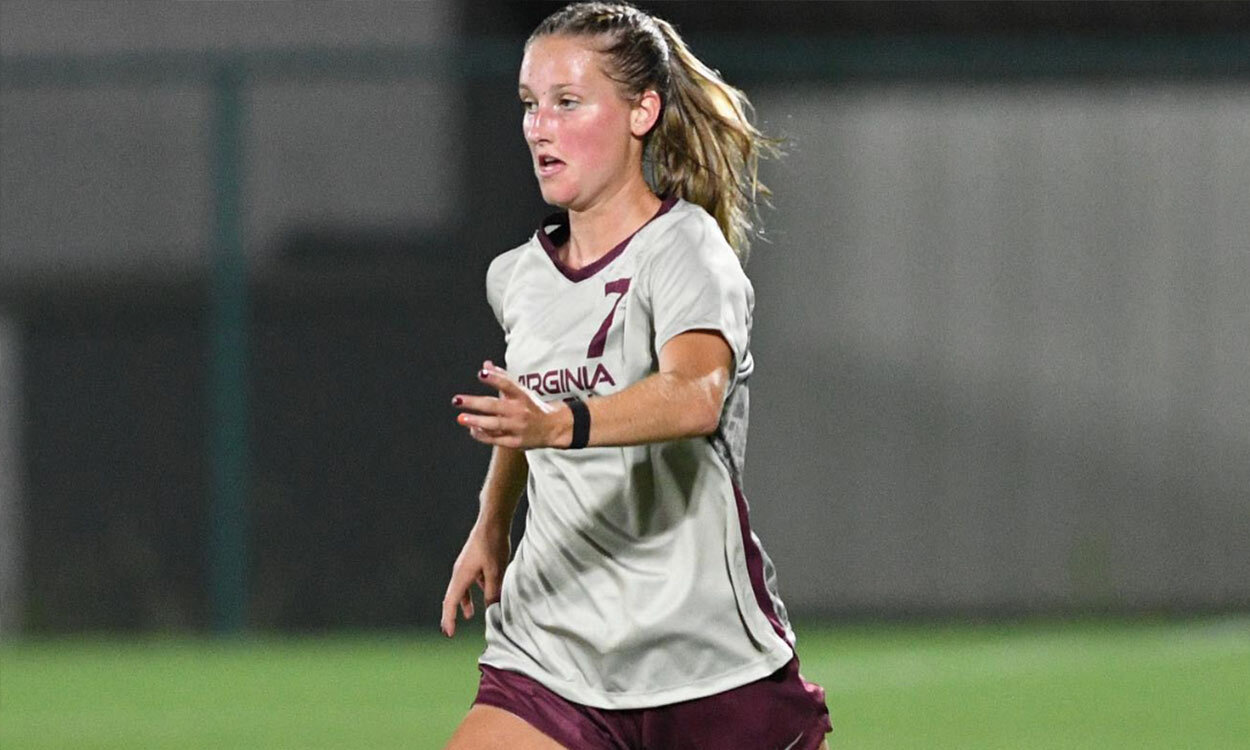
In September 2020, Virginia Tech football player Kiersten Hening was benched after refusing to take the knee for a pre-game “unity statement” ahead of a match against the University of Virginia (UVA). What followed was a series of alleged accusations from Hening that she’d been ostracised from the team and her coach—culminating in the midfielder quitting the team and subsequently seeking legal action. Fast forward to January 2023 and Hening has now received both a $100,000 settlement, dodged a lengthy federal investigation and incited a media flurry surrounding her “political beliefs.”
Let’s unpack the details surrounding the incident and following lawsuit, shall we?
In September 2020, Hening and her football team, the Hokies, were gearing up for a game against the women’s UVA team. During this time, a number of sports teams had begun ‘taking the knee’ before matches—as a direct form of solidarity with the Black Lives Matter movement, which had reached its peak after a series of national protests across the US following the brutal murder of George Floyd.
After refusing to make the political statement along with the rest of her team, Hening claimed that her former coach Charles ‘Chugger’ Adair verbally abused her at halftime, wagged his finger in her face and told her to stop “bitching and moaning.” After the game, Hening remained benched and allegedly continued to be chastised by Adair which resulted in the former football player officially leaving the team.
In 2021, some months after the incident occurred, the midfielder sued Adair on first amendment grounds, alleging that she had been punished for her political views, as reported by Fox News. In the suit, Hening stated her support for social justice issues, however, she subsequently emphasised her dislike for the BLM organisation—citing its “ tactics and core tenets of its mission statement, including defunding the police” as inherently opposed to her own values and beliefs.
Both Virginia Tech and the Hokies coach tried to have the case thrown out after Adair pointed out two other players who also decided not to kneel but did not lose their starting spots. Nevertheless, on 2 December, federal judge Thomas Cullen denied a motion to dismiss the lawsuit, agreeing with Hening that there had been a noticeable dip in her playing time after the event occurred.
“Ultimately, Adair may convince a jury that this coaching decision was based solely on Hening’s poor play during the UVA game, but the court, viewing the evidence in the light most favourable to Hening, cannot reach that conclusion as a matter of law,” Cullen ruled.
Shortly after the settlement was reached, coach Adair released a statement on Twitter, sharing his relief that the case had finally come to an end:
— CoachChugger (@CoachChugger) January 4, 2023
This is not the first time we’ve seen personal political views spark controversy within the sporting arena. In 2016, US civil rights activist and football quarterback Colin Kaepernick received worldwide backlash after deciding to take the knee during the national anthem at an NFL preseason game between the San Francisco 49ers and the Green Bay Packers. Kaepernick’s motive was to initiate a call to action in relation to racial injustice and police brutality in the US. While it may have drawn criticism from some, it simultaneously marked the beginning of a wave of solidarity—one that still stands today, with many English football players still respecting and honouring this new symbolic protest.
More recently, global football organisation FIFA threatened to impose strict sporting sanctions against any football captains who donned the OneLove armband—a visual statement and symbol of LGBTQIA+ rights—during the course of the Qatar World Cup 2022.
While some may still consider sports and politics to be distinct and inherently separate, it’s becoming clear that that is far from the truth—if anything, the politicisation of sports is heading towards a steep incline.
