What is asexuality? Everything you need to know




Like homosexuality, heterosexuality and bisexuality, asexuality is another sexual orientation, although one still extremely wrongly interpreted. Speaking openly about sexual intimacy and romantic relationships has become so common in our society that it led to a misunderstanding of asexuality. That’s why we are here to speak about asexuality, discuss what it is and, most importantly, what it is not.
What is asexuality?
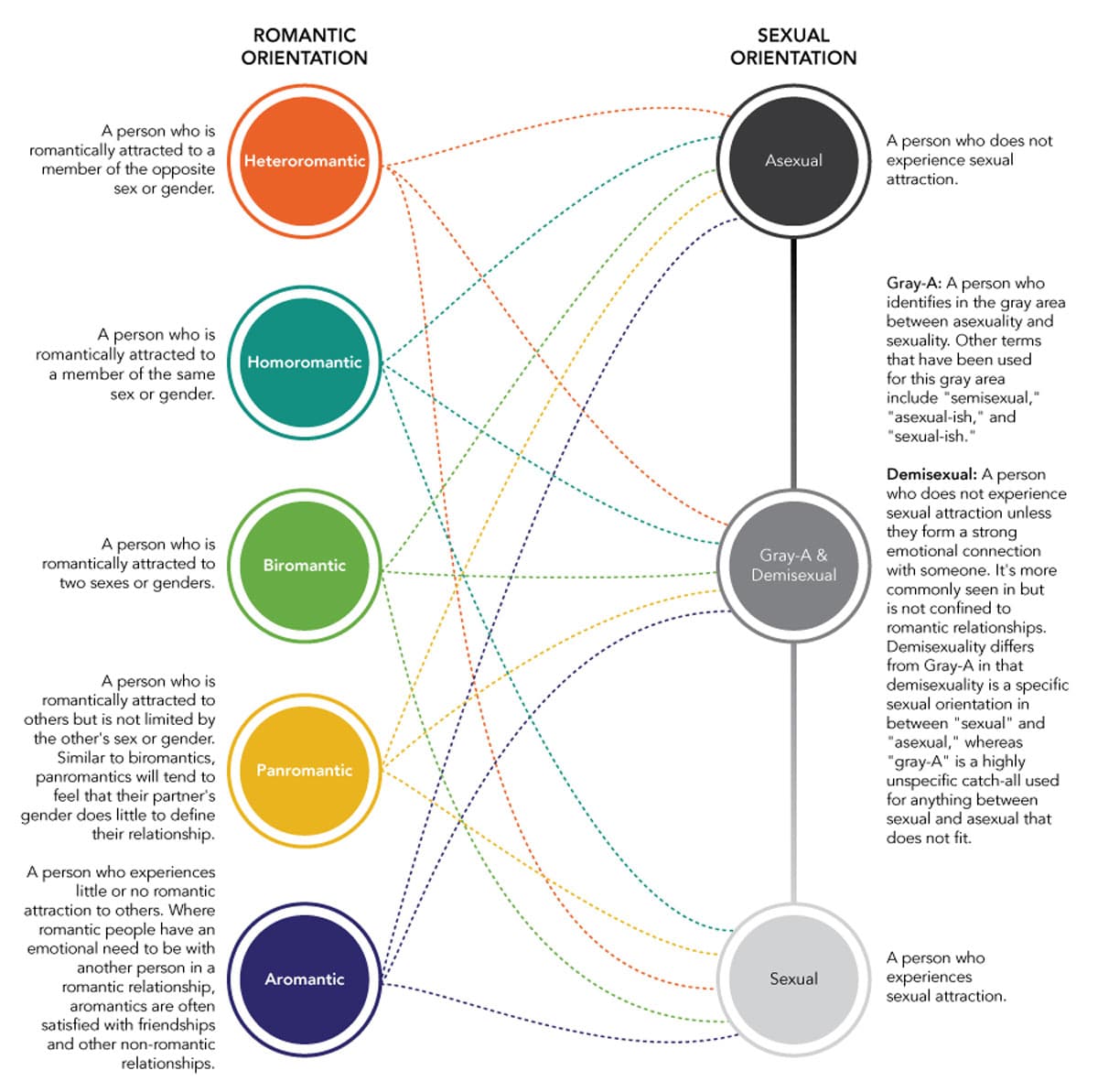
Asexuality is a sexual orientation, just like homosexuality, heterosexuality and bisexuality. In the initialism LGBTQIAP+, the A stands for ‘asexual spectrum’ or ‘a-spec’. Broadly defined as “the quality or characteristic of having no sexual feelings or desires,” asexuality is constituted of complex categories and orientations that can be placed on the asexual spectrum.
This means that many asexuals identify with two orientations; a romantic and a sexual one. According to the Asexual Visibility and Education Network (AVEN), an asexual’s romantic orientation determines “which gender(s), if any, they are inclined to form romantic relationships with.” There are also individuals in the asexual community who identify in the ‘grey area’ between asexuality and sexuality.
Important things to know about asexuality
Asexual people, sometimes known as ace or aces for short, have the same emotional needs as everyone else. This means that most asexuals will desire and form emotionally intimate relationships with other people, while some may not. They may be attracted to the same sex or other sexes, which means they can be as fluid as anyone else. Of course, because everyone is different, how individuals fulfil those needs may vary.
Asexuality exists on a spectrum that includes people’s desire for relationships, attraction, and arousal. Many asexuals want and are in relationships, with not only other asexuals but sexual people as well. Some asexual people may identify as ‘demisexual’ and ‘aromantic’, or another combination of the two sides of the spectrum.
While most asexual people have little interest in having sex, they may experience romantic attraction—others may not. There are asexuals who masturbate and enjoy sexual intimacy with others, while not being sexually attracted to anyone.
Often, some people misinterpret romantic attraction or sexual arousal as being a sexual attraction, only to realise later that they are asexual.
What are the 3 main categories in asexuality?
To simplify the asexual spectrum, here are three broad ‘categories’ in asexuality.
First, some asexuals may want romantic relationships. They can feel romantically attracted to other people, which may include the same sex or other sexes.
Secondly, other asexuals prefer close friendships to intimate relationships. Some will experience arousal, and some will masturbate while having no interest in having sex with another person.
Thirdly, some asexual people do not want to have sexual contact, while others may feel ‘sex-neutral’. Other asexual people will engage in sexual contact in order to gain an emotional connection.
Asexual people don’t want your pity, they need your understanding
What asexuality is not
Asexuality is not a mental disorder such as SAD (sexual aversion disorder) or HSDD (hypoactive sexual desire disorder). An asexual person may feel anxious due to societal pressures and reactions, but not due to the idea of sexual contact itself. Furthermore, asexuality is not caused by chemical or hormonal imbalance.
Asexuality is not celibacy. Celibacy is the decision to refrain from sexual contact, whereas asexuality is an orientation and, as stated previously, there are asexuals who engage in a range of sexual contact with themselves and others.
Some of you might still feel confused about asexuality, and it is okay to be so. But getting a good understanding of the asexual spectrum is a necessary step towards appreciating the many variations it represents. Understanding is the key to acceptance.
