KFC is working on 3D-printed nuggets



In the last few years, we’ve witnessed the rise of lab-grown and plant-based food and started swapping juicy, non-vegetarian burgers for the alternative meat industry’s Beyond Burger. We even went as far as to binge-eat (or binge-watch) digital food on Instagram. In other words, the food industry saw some pretty mind-blowing changes. But there remains one trend that didn’t receive as much attention as the previous ones just yet: 3D-printed food.
Now, things are finally about to get interesting in the 3D-printed food market. KFC, along with the California-based startup Finless Foods, are both getting involved. Forget about 3D-printed guns flooding the US market. How does a meal of bioprinted chicken nuggets sound instead?
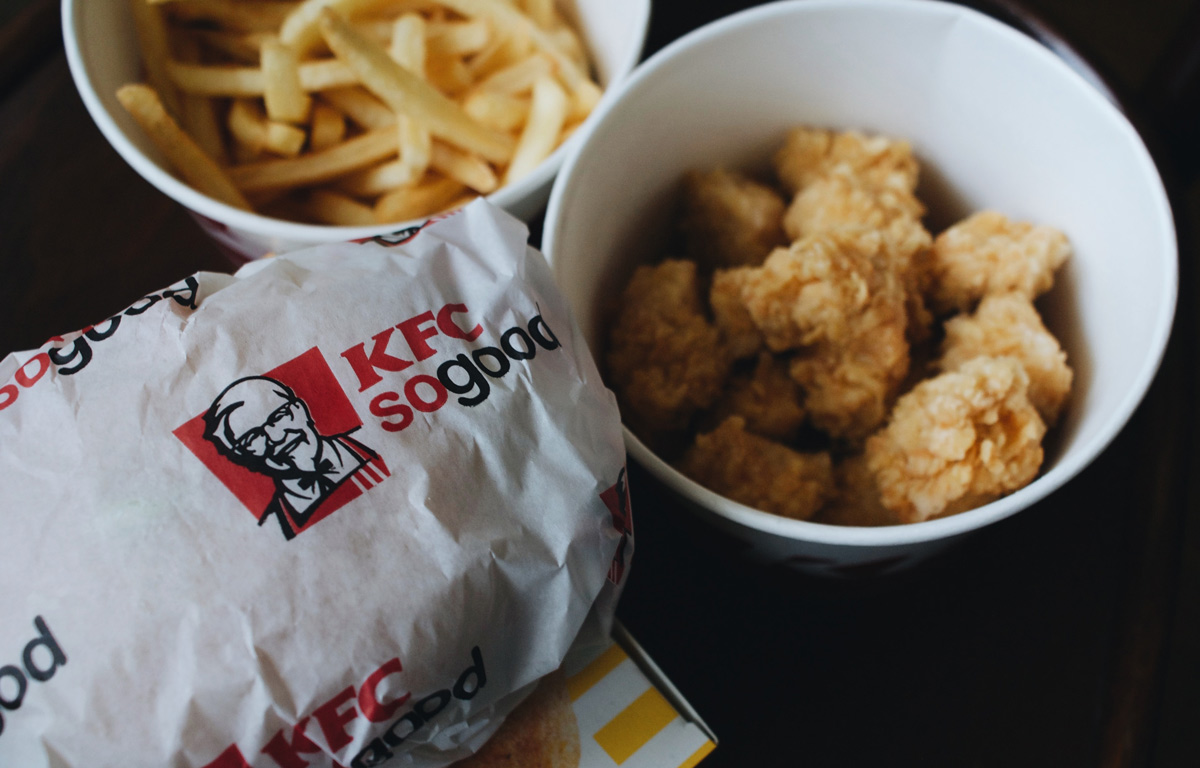
KFC just announced a partnership with the Moscow-based company 3D Bioprinting Solutions to test out bioprinted chicken, which could be one of the highest-profile deals yet for the lab-grown meat industry. KFC added it will have its final testing for the product this fall, and thinks printed meat will become part of its “restaurant of the future.” Details on when or where the printed nuggets will be available have not yet been shared.
The fast-food chain plans to provide 3D Bioprinting Solutions with ingredients like breading and spices “to achieve the signature KFC taste” and will, of course, seek to replicate the taste and texture of real chicken. For the vegetarians reading this, don’t get too excited as the bioprinting process KFC describes uses animal material, so any nuggets it produced won’t be suitable for vegetarians, unfortunately.
According to KFC, bioprinted nuggets still represent some major positives when compared to real chicken meat. The 3D-printed nuggets would be more environmentally friendly to produce than chicken. In its announcement, KFC cited a study by the American Environmental Science and Technology Journal which it says shows the benefits of growing meat from cells, including reductions in greenhouse gas emissions and energy consumption compared to traditional farming methods.
Meanwhile, the startup Finless Foods has been trying to use 3D printing to improve astronauts’ diets. The company is currently working on cultured fish cells that can be grown in zero-gravity environments. To achieve this, Finless Foods also partnered with 3D Bioprinting Solutions. Last year, the companies sent a bioprinter along with a set of fish cells to NASA’s International Space Station (ISS) for testing.
The team was able to grow the cells to a certain density and use the bioprinter to arrange the fish cells into 3D structures, forming small spheres of cells—the first step toward shaping it into something that looks like the food we consume on Earth. As complex as this process sounds, it might be the only chance for us to get presentable food in space.
When it comes to the possibility of having humans live in space, there seems to be one problem (among others): sending items into space is extremely expensive—about $10,000 a pound, according to Forbes. That’s why we need to start thinking about a way to make our own food in space. Growing fish meat without the actual fish could help in this specific situation. And if shown possible, Finless Foods’ fishcakes could also represent a sustainable option on Earth, one that doesn’t overexploit seafood.
Now, as exciting as both these projects sound, bioprinting still faces a few problems. The most significant one for now being the lab-grown meats’ texture. For now, the fake meats don’t mimic the same muscular structure of, say, a normal fish. Instead, they look a lot like mincemeat, which makes them a whole less appealing all of a sudden.
While companies are working on this issue, this mushy lab-grown meat might just be the perfect option for our pets. According to The Hustle, a number of companies including Bond Pet Foods and Because Animals “are already racing to corner the 3D-printed pet food market.” As we impatiently await KFC’s bioprinted chicken nuggets, we can sleep at night knowing that if not us, at least our pets are enjoying a lovely eco-friendly meal.
