Meet the startup aiming to deliver organs, hospitals and pizza across the world from outer space



From manufacturing artificial organs to testing skincare routines in zero gravity, space stations and satellites have been hailed as the sophisticated factories of the future. But what if the economic potential of space could be pushed to include other commercial activities like warehousing and even transportation? Enter Inversion Space, a Los Angeles-based startup aiming to turn outer space into the next frontier for express deliveries.
Building Earth-orbiting capsules, Inversion Space aims to not only send items into orbit but bring them back to Earth and help deliver the packages anywhere in the world within minutes. To make the latter pitch a reality, the capsules will reenter the Earth’s atmosphere at 25 times the speed of sound—leveraging parachutes to ensure a soft landing and undisturbed cargo. Anyone else still worried about their fragile parcels?
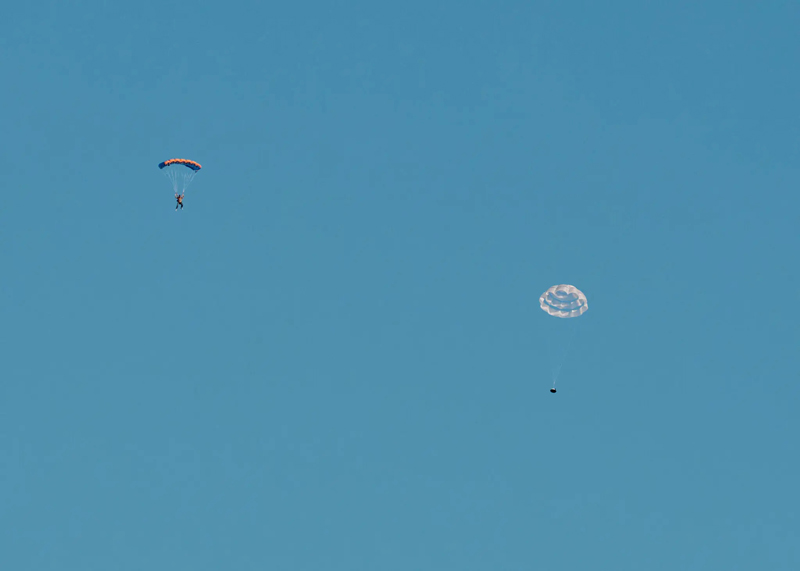
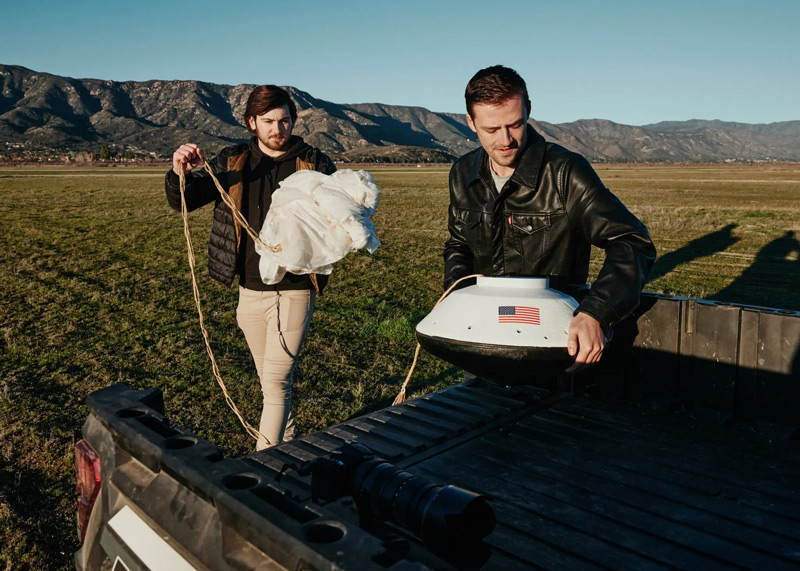
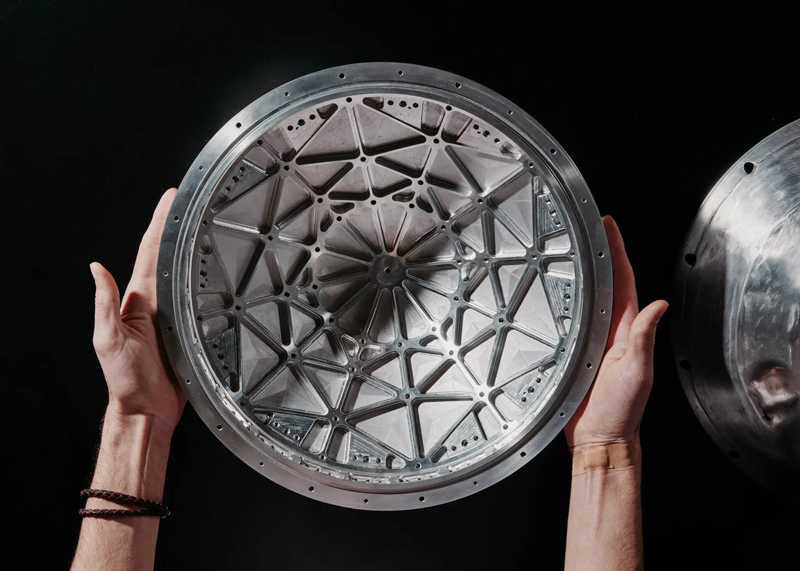
By 2025, Inversion Space seeks to develop a four-foot-diameter capsule bearing cargo equivalent to the size of a few carry-on suitcases. Once in orbit, the capsule is designed to navigate itself to a private commercial space station or stay in orbit with solar panels—until summoned back to Earth. Deploying parachutes, the capsule will then re-enter the atmosphere to land within a radius of ten miles from its target location. “The company has planned a smaller demonstration capsule with a 20-inch diameter to be ready by 2023,” The New York Times noted.
In an interview with the outlet, the startup’s founders, Justin Fiaschetti and Austin Briggs, outlined the capsule’s potential to store artificial organs that could be delivered to an operating room within a few hours or “serve as mobile field hospitals floating in orbit that would be dispatched to remote areas of the planet.” If successful, Inversion Space would pave the way to numerous containers floating around in space for up to five years—doubling up as distant storage lockers.
In the long run, the initiative could ultimately lead to the creation of a shortcut through space that could foster unimaginably fast deliveries. “Like delivering a New York pizza to San Francisco in 45 minutes,” The New York Times went on to explain.
Though this sounds like a wild Hollywood script, let’s not forget that the cost of accessing space is becoming cheaper—thanks to private companies like SpaceX and Blue Origin. While Inversion Space declined to offer the estimated cost of its capsules, it’s worth noting that the monetary value of launching one kilogram of payload to outer space has fallen by roughly 90 per cent in the last 30 years.
However, the project comes with its own list of reality checks. For starters, the capsules face the impending risk of burning up while reentering the atmosphere. “It becomes harder when you have a smaller item to control,” Seetha Raghavan, a professor in the University of Central Florida’s mechanical and aerospace engineering department, told The New York Times—adding how it’d be even more difficult to handle the heat, vibration and deceleration as the size of the capsules shrink.
Then comes the entire debate about its addition to the congestion in outer space, otherwise known as space junk. While SpaceX’s Starlink satellites are already photobombing astronomy images—alongside its plans to send the world’s first digital billboard into space—Inversion Space highlighted that it’s using materials to make its capsules “significantly less reflective to decrease visual pollution.” The startup also admitted that the capsules would be produced with systems to avoid debris and collisions in orbit.
Nevertheless, Inversion Space has already raised $10 million in seed money to fund its venture. Joining Y Combinator, a Silicon Valley incubator known for early investments in Airbnb and Stripe, the startup in question is one among the growing number of researchers and companies who are now looking to make commercial activities feasible in the skies and beyond.
