Spider-Man: Across the Spider-Verse is proof that multiverse madness needs to end


Sony Pictures Animation’s long-awaited sequel to its 2018 hit Spider-Man: Into the Spider-Verse landed in UK cinemas on 2 June 2023, and was instantly met with both critical acclaim and audience appreciation. And, rightfully so, the film is a marvel (pardon the pun) of animation and storytelling.
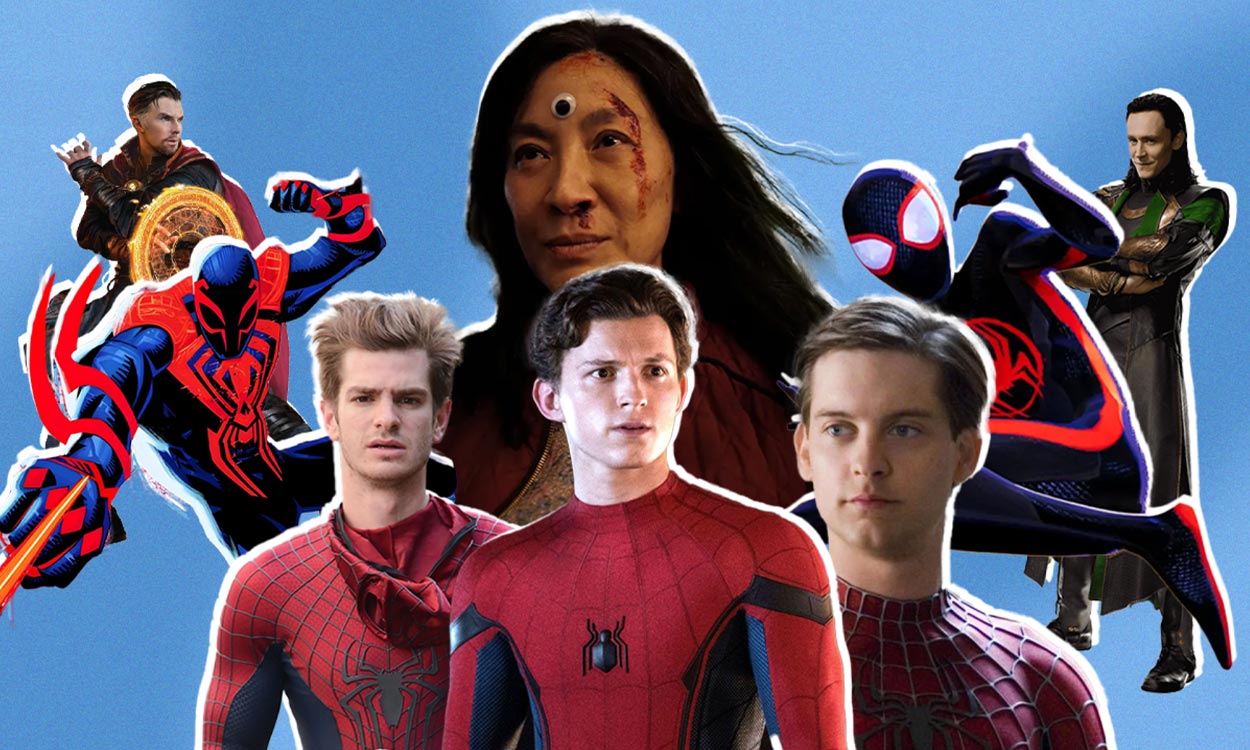
That being said, a theme that sits right at the centre of Spider-Man: Across the Spider-Verse is that of, you guessed it, the freaking multiverse—a trope that has become increasingly popular over the last few years. It can be seen all over recent releases from Marvel’s Doctor Strange in the Multiverse of Madness to the Oscar-dominating Everything Everywhere All at Once.
It’s not just movies either. Video games and TV shows have also caught the multiverse madness bug. And honestly, I’m sick of it. But in order to successfully kill the beast, we must first understand why it’s everywhere (all at once).
What is the multiverse theory?
A quick explainer for those in the dark on the trendy scientific theory that has been dominating our imaginations (and Netflix accounts) as of late. The multiverse theory is the idea that there are an endless amount of universes beyond our own.
You should be pretty familiar with our own universe by now. There’s the Earth, the sun, the moon, stars, mars, the Milky Way—all that good outer space stuff. Well, the multiverse theory essentially proposes that we’re just one of many universes among a great fabric of worlds, each with their own possibilities and unique lineage.
With an infinite number of universes comes the idea of an infinite number of parallel universes, worlds that are similar to ours but with varying degrees of differences—hence Spider-Man’s journey into the ‘Spider-Verse’. Most of us know Peter Parker as the one and only Spidey, but Sony’s animated feature follows none other than Miles Morales, a teenager of Afro-Puerto Rican descent, who just so happens to be Spider-Man in his very own universe.
In short, it’s the idea that there’s an infinite number of possibilities playing out across different universes, all simultaneous to our own, and boy does pop culture love to play with the ideas that this sandbox presents.
What started the multiverse trend?
We can pretty easily trace the current obsession with multiverses back to Superhero comics, a medium that began in the 1930s. When you’re dealing with characters and worlds that have been around for almost a century, it’s understandable that creators would need to refresh perspectives. So, rather than rely solely on the world you’ve already laid out, why not reboot the story in an entirely new universe?
DC and Marvel have both seen their universes rebooted numerous times, with DC Comics’ 1961 The Flash #123 being widely accepted to be the first appearance of a multiverse in comics. Marvel has seen numerous universes in its own mythos, the most notable being the Ultimate Comics line, a reboot that hoped to refresh Marvel’s iconic heroes for the new millennium.
Naturally, different versions of these characters have met throughout different storylines. Comics are not known for keeping things low-key and writers and illustrators are constantly looking for new ways to raise the stakes.
Why are so many movies set in the multiverse?
With comic book films being such an important part of today’s movie industry, it’s only natural that they would follow in the footsteps of their originators and start approaching multiverse storylines that feature a ton of intricate crossovers.
Marvel’s original 2014 Spider-Verse comic event (the inspiration behind Sony’s new animated Spider-Man trilogy) is a great example of the fun that can be had within the multiverse, and was definitely instrumental in planting the seeds for viewers’ future obsession. Suddenly, all these different characters, all of whom carry the mantle of Spider-Man, get to meet and interact.
It’s fan service at its finest, and that’s okay. In the case of 2018’s Spider-Verse, it felt fresh and exciting, a reliable outing in the hands of Phil Lord and Chris Miller, the minds behind The Lego Movie and 21 Jump Street, two very different yet equally enjoyable movie experiences.
The same comic book event inspired 2021’s Spider-Man: No Way Home surprising audiences with appearances from Tobey Maguire and Andrew Garfield, both actors who had previously played Spider-Man on the big screen, but for different studios. The film was a gen Z nostalgia dream come true, and audiences ate up every single moment and meme.
Unsurprisingly, Marvel Studios was far from done with the multiverse trope. After setting up bizarre alternate dimensions in the company’s TV outings with Loki and WandaVision, The 2022 Doctor Strange sequel, aptly titled Doctor Strange in the Multiverse of Madness dove headfirst into this realm of infinite possibilities.
Following this, Ant-Man also took a stab at it with 2023’s Quantumania, setting up for Marvel’s phase five of films—all of which seem to revolve around the multiverse and villain Kang, played by Jonathan Majors. Although it seems Marvel may have to completely rethink this saga as its new villain Majors has been hit with a slew of domestic assault charges.
Okay, stay focused, because the multiverse hype doesn’t stop at Marvel. The 95th Oscars gave best picture to Everything Every Everywhere All at Once (EEAAO) last year, a film that used the infinite universes theory as a backdrop for a heartfelt story about generational trauma.
Marvel’s age-old rival hopped on the hype train too. The Flash, which stars the highly problematic Ezra Miller, is due out on 16 June, and will also see the alternate worlds collide for the first time in the DC Extended Universe (DCEU), with Michael Keaton once again becoming Batman, after playing him in the Tim Burton films from the 90s.
The nostalgia bait with the resurrection of these old actors, as well as the lack of originality as a result of multiple different studios having a try at it, is starting to get really stale. With a film such as The Flash, it feels like DC is playing every card it can to try and get people into the cinema before it closes the door on the DCEU by bringing in the highly nostalgic Keaton for another outing as Batman.
You can’t turn anywhere without seeing multiple iterations of fan-favourite characters and wacky alternate worlds (we’re talking about you, hotdog finger universe from EEAAO). It’s already starting to feel exhausting to keep track of all these different worlds.
We’re in a race to go to bigger and bolder heights on the big screen, and in so many ways we’ve already reached the peak of what’s possible. In the case of Spider-Man: Across the Spider-Verse, developers may have gone slightly too big with its inclusion of about every single Spider-Man iteration under the sun—there was even a dinosaur Spider-Man somewhere in that movie. Realistically, every story told from here is going to feel miniscule in comparison.
Although an initially interesting concept, it already feels like it’s been done to death. From Rick and Morty and Fortnite to Loki and The Flash, I’ve personally had my fill of multiverse crossovers for a lifetime—well the me of this universe has anyway.
